Is Plant Medicine Safe? Sometimes the Answer Is No
Here is something that might surprise you.
Most people who come to us are not worried about their medication, or their diagnosis, or their heart, or what they take every morning without a second thought. If anything, most assume none of it will matter here. Plant medicine feels natural in a way pharmaceuticals do not, ceremonial rather than clinical, and so the question of whether their own body can actually hold this work rarely crosses their mind before they ever reach us.
It is usually only once we start asking, properly asking, that it begins to sink in. That this is not the soft, glowing, love and light picture that social media and a thousand self-proclaimed Insta or YouTube shamans have been selling. That this can hurt you. That someone needs to be paying very close attention to keep you safe, because until that point, you likely have not been.
So no, the question that matters most is not whether the plant itself is safe. It is who is holding it, and whether they will tell you the truth even when the truth costs them your booking.
Let me show you what that looks like, with something I do not often share.
The email I did not want to send
Not long ago, someone reached out to us. Sincere, thoughtful, and genuinely ready to do this work. I liked them. It was a good conversation, and I could feel how much they were hoping for a way through.
After we spoke, I did what I always do when a situation asks for extra care. I went back through our conversation slowly. I watched the full recording and read every word of the transcript. I looked closely at everything they had shared with me. And, the way a surgeon would never operate without first debriefing with their own team, I sought guidance from my teachers. That is not a courtesy. It is exactly what I was trained to do whenever a situation asks for more judgment than mine alone.
The picture was complicated. They were on several medications, among them a long-acting opioid and a benzodiazepine. Both of those can only be brought down slowly, and only under a doctor's care. Other medications in the mix did not sit safely alongside this medicine at all. On top of that, there was a neurological condition and a history of episodes of dissociation.
None of it could be made safe in the weeks before the next retreat. Not honestly. Not without asking them to rush something with their own body that should never be rushed to fit a date.
So I did the thing that had their best interests in mind. I sent the email, and I said no.
"This work has never been about filling seats. Just as important as guiding someone through it is knowing when it is safe to proceed and when it is not, and being sure they can go home to their life and family well afterwards."
I told them plainly that some of what they were carrying needed to come down slowly, under their own doctor's care, and never on a timetable set by a retreat. Another thing was their neurological conditions, some of which made their participation risky. I told them their wellbeing mattered more than a seat. And I urged them to be careful with anyone who would treat their history more lightly than that.
It was not the answer they wanted. I did not enjoy giving it. But it was the true one.
Why I am telling you this
I am not sharing this to look good. I am sharing it because it is the clearest picture I can give you of what safety actually is.
Safety is not a paragraph on a website. It is not a first aid kit in the corner of the room. It is a decision, made quietly, to lose a booking rather than carry a risk you cannot see the bottom of.
Every retreat on earth will tell you they are safe. The real question is whether they have ever proven it by saying no.
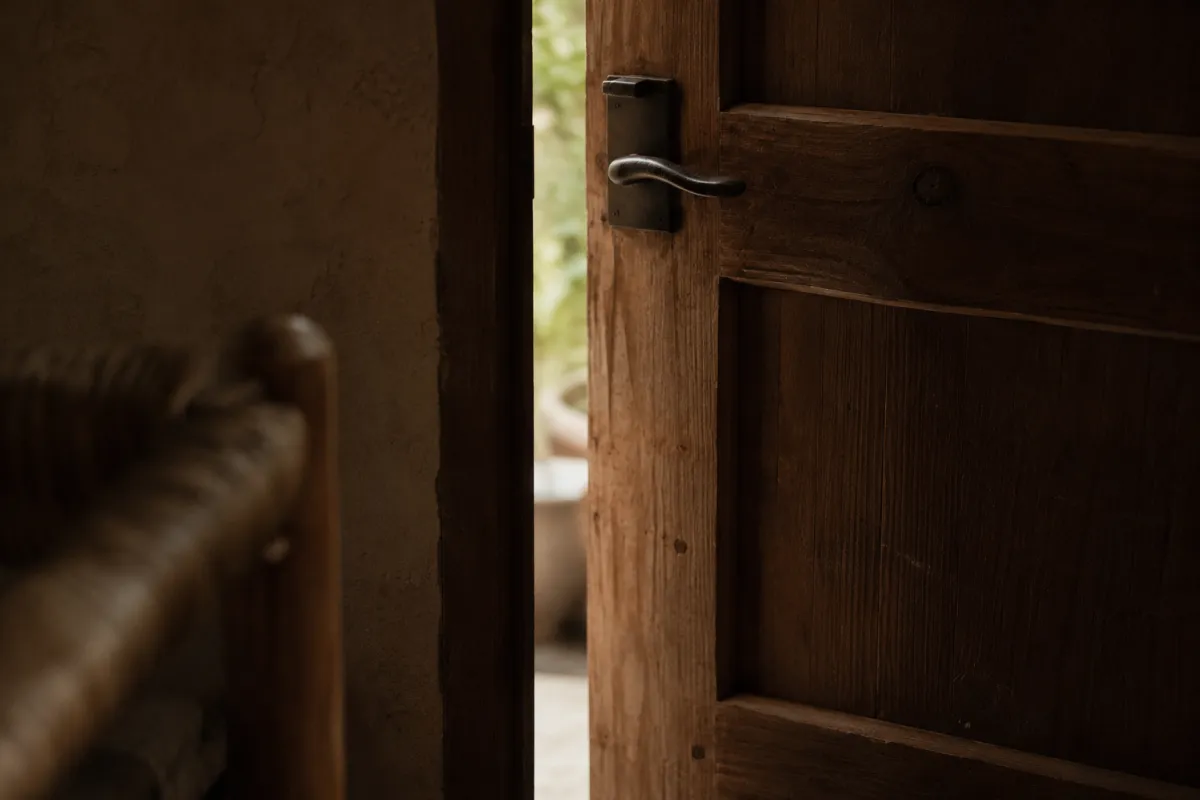
So ask them. Ask how many people they turn away, and why. Ask what would make them refuse you. If the honest answer is that they have never really refused anyone, you have just learned the most important thing about them. A door that opens for everyone is not a safe door. It is simply an open one.
The room I want you to picture
Now hold that email against the thing most people meet first when they go looking.
Thirty people in a room. Sometimes forty, sometimes more. Often more than one plant medicine across the same weekend, ayahuasca one night and something else entirely the next, as if a body were a venue that could simply be rebooked. Music, a crowd, an atmosphere. Everyone welcome, because everyone is a paying seat. Nobody asked what medication you are on. Nobody asked about your heart, or your mind, or the people at home who depend on you. Nobody sought guidance about you from anyone, because nobody looked closely enough to have anything to ask about.
For a lot of people in that room, the point has quietly become the experience itself. Something big. Something visionary. Something to carry home and describe, and photograph, and post. The next one already half planned before this one has been understood.
I understand the pull, because I was in a room like that once, at the very beginning. Thirty five people, and someone at the front playing a part they had not earned. I came away worse than I went in.
Here is the hard truth about that kind of gathering. It is not built to hold you. It is built to move numbers. And a space built to move numbers cannot, by its very nature, stop and tell one person no. The whole design depends on the answer always being yes.
What a real container actually is
Traditional practice was never a crowd. It was small, close, and slow. A few people. A great deal of preparation. Someone serving who never wanted it and eventually had spent years being trained, broken down, and built back up, and who understood that their first duty was to the person in front of them, not to the medicine and not to the takings.
And afterwards, something far simpler and more honest than what modern shamanism has turned it into.
You will see the pattern everywhere once you know to look for it. The suggestion that without months of paid integration calls you cannot possibly process what happened. That you will unravel without a coach checking in on you every week. That the ceremony itself was never going to be enough on its own, so you had better keep paying for the thing that supposedly finishes it. It is one of the more effective scams running in this field right now, mostly because it is dressed up as care.
We do not run an integration program. What we offer is a handful of follow up calls, and they are exactly what the name says. A chance for you to tell us how you have landed back in your own life. What you actually understood, and how it is showing up, in the way you speak to the people you love, or sit with your own mind, or move through an ordinary Tuesday. And a chance to stay lightly connected with the small group of people who sat beside you through something most people never share with anyone at all.
That is not hand holding. It is simply what people who have been through something real tend to do for each other afterwards.
That is what we mean by a container. Not a venue. A way of holding a person that begins long before the ceremony and continues well after it. Small groups. Careful screening. Weeks of preparation on the way in. Real follow up on the way out. And, always, the willingness to say that this is not the right time.
If that sounds old fashioned, it is. We mean it to be. The old fashioned way is old fashioned because it kept people safe for a very long time, and the modern shortcuts have not earned the right to replace it.
Do not go looking for a loophole
One more thing, because it comes up often.
When someone hears that their medication rules out one medicine, they sometimes assume another will be a quiet way around it. That if the door is closed on one path, a different plant, or a different brew, must be the safer road.
Usually it is the opposite. Some of the alternatives people reach for, an ayahuasca brew, or a locally made Acacia preparation carrying an MAO inhibiting ingredient, are far less forgiving of medication, not more. It is worth knowing, especially here in Australia, that what is often sold to you as ayahuasca is not the Amazonian brew at all. It is usually an Acacia based preparation, grown and mixed locally, wearing a name it never earned, and it can carry the very same serious interactions as the real thing, without the lineage or the trained hands that traditionally know how to hold it. Switching the medicine does not remove the risk. It often deepens it, particularly when what you are being served is not even what its label claims. We explained exactly why in our piece on medication and this work.
The honest path is never the loophole. It is the full picture, looked at properly, by someone willing to act on what they see.
Why the careful ones get the most from this
Here is what people rarely expect.
The care is not a barrier to the work. It is the work beginning. The people who get the most from what we do are almost always the ones we held most carefully at the start. The screening, the preparation, the slow build, the honesty about what fits and what does not. None of that is red tape wrapped around the experience. It is the reason the experience can land at all, and the reason it stays with a person once they are home.
"Both Rodolfo and Grace hold a safe and calm container to do the deep inner work. If you are looking for real shamanic work and not the fakery, these are your people, and once you experience it you will know why."
Google review
Frequently asked questions
Is plant medicine safe?
It can be when it is held properly, and it is not when it is not. Safety does not come from the plant. It comes from the people around it: real screening, small groups, thorough preparation, trained and sober support throughout, a clear plan if something goes wrong, and someone whose first duty is to you rather than to the numbers.
What makes a plant medicine retreat safe?
Small groups. A careful screening process that asks about your medications, your physical health, your mental health and your family history. Serious preparation before, and real follow up once you are home. Someone trained within a genuine tradition and someone who is present and sober throughout. And a willingness to turn people away when it is not safe to proceed.
Why would a retreat turn someone away?
Because some medications, medical conditions and circumstances cannot be made safe within the time available, or at all. It works the same way before an operation. A surgeon will postpone even a needed procedure if a patient's blood pressure or blood sugar is too high on the day, and nobody calls that unfair, they call it responsible. A retreat that has never turned anyone away is not safer for it. It is less safe, because it means nobody is truly being screened.
I am on medication. Can I just choose a different medicine instead?
Please do not assume so. Some of the medicines people reach for as an alternative, including Acacia based preparations sold locally as ayahuasca, are less forgiving of medication, not more, particularly anything carrying an MAO inhibiting ingredient. The right approach is an honest look at your full picture with someone qualified to weigh it, not a search for a way around the rules.
Are large group ceremonies safe?
Would you agree to an operation with thirty other patients under anaesthetic in the same theatre, one surgeon moving between the tables trying to watch everyone at once? Nobody would agree to that, and a thirty or forty person ceremony is not so different from it. Real care becomes structurally impossible at that size, not just unlikely. No one can be properly watched, and true screening does not scale to that many people in a single weekend. What tends to matter most in a room that size is usually the experience itself, the visions, the atmosphere, the story of having gone through something with a crowd, rather than the slower and longer lasting change this work can actually offer one person. Traditional ceremony was always small, for exactly this reason.
What should I ask before I book anything?
Ask who trained the person serving, and for how long. Ask how many people they turn away, and what would make them refuse you. Ask about group size, preparation, integration, and what happens in an emergency. Notice whether they want to understand your full history, or whether they mostly want your deposit. Our guide to choosing who to trust walks through the rest.
This article is educational and is not medical advice. Any change to prescribed medication belongs to you and your doctor, in the time it needs to be done safely.
A quiet invitation
If you have read this far, you are almost certainly the kind of person we would want to sit with. Careful. Serious. Drawn to something real, and unwilling to be careless about it.
That carefulness is not in your way. It is the beginning of the whole thing.
If you would like a clear place to start, you are welcome to read our free safety guide, which lays out the questions worth asking anyone before you trust them with something this serious, including us.
And if you feel ready to talk, it starts with a call. Bring everything. The whole picture, including the parts you were hoping would not matter. We would far rather know it all, and tell you the truth, than fill a seat.
Sometimes that truth is yes. Sometimes it is not yet. Either way, it would be an honour to give you an honest answer.


